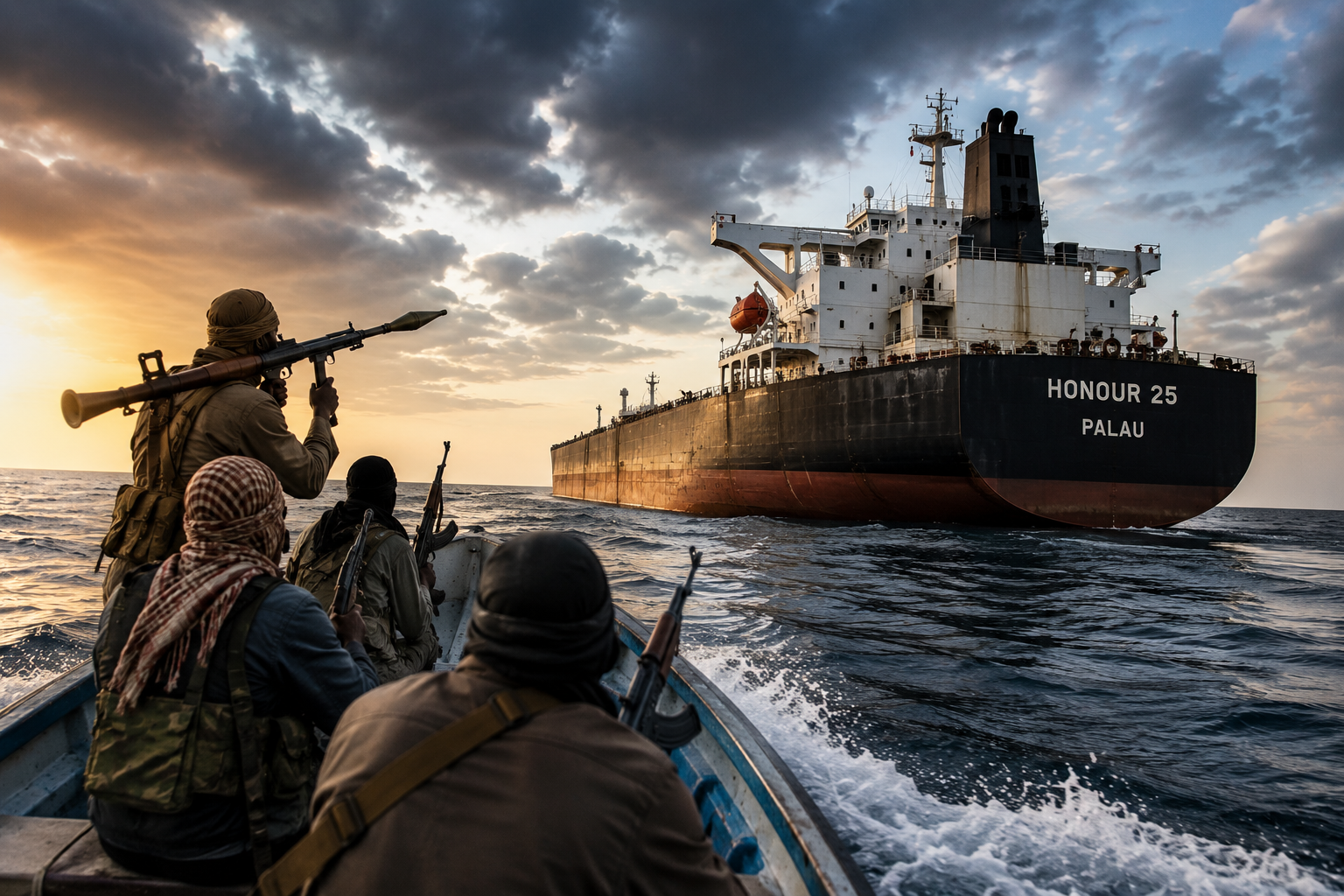
On April 20, when all eyes were on the US-Iran ceasefire talks in Islamabad, the pirates from Somalia made a dramatic comeback in the Indian Ocean Region, hijacking a Somalia-flagged fishing vessel, ALKHAYR 2, off the coast of Somalia. At least 11 armed pirates boarded the ship, but disembarked a day later. On the same day, six pirates in four boats with Kalashnikovs and Rocket-propelled grenades (RPGs) hijacked HONOUR 25, a Palau-flagged oil tanker, 30 nautical miles off the Puntland coast in Somalia. As per MarineTraffic, the tanker remains stranded at sea.
A sudden surge in hijacking incidents off the coast of Somalia was reported, with six more occurring within the eight days following April 20. This spike occurred while global attention was preoccupied with the situation in Iran and the potential blockade of the Strait of Hormuz. When the conflict was at its peak in March, an Iranian dhow (a traditional sailing vessel) was hijacked by Pirate Action Groups (PAGs) 400 nautical miles off Somalia. It was used as the mothership for operations. The Indian Navy’s Information Fusion Centre warned about the presence of PAGs in the region. Still, it said that, historically, the pirates have not taken advantage of regional conflicts and are less likely to benefit from the Iran conflict.
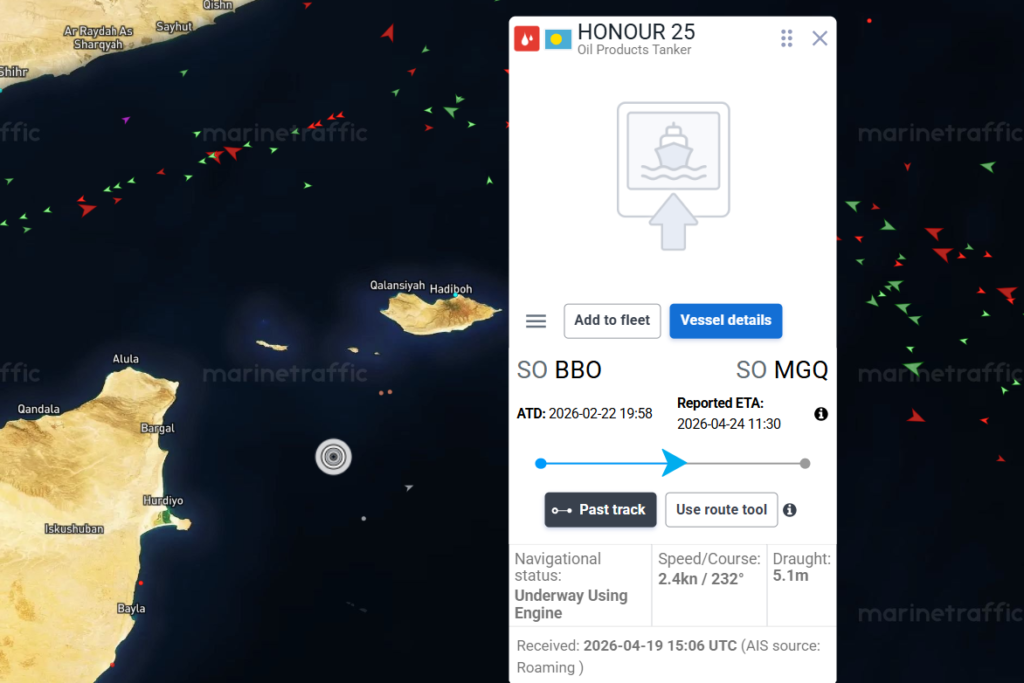
Figure 1: The last known location of HONOUR 25.
Fears of an increase in piracy were sparked by the reappearance of hijackers in the Indian Ocean, coinciding with the Gulf crisis. The Information Fusion Centre-Indian Ocean Region (IFC-IOR), an Indian Navy-hosted regional maritime security centre, raised similar worries in November 2025. This concern stemmed from the observation that the traditional hijacking method, last seen during the Red Sea crisis of 2023-2024, was making a noticeable return.
Inside the tactics of Somali Pirates
Harardheere, Hobyo, Garacad and Eyl have traditionally been the bases from where the pirates have operated. The coastal cities are a major economic hub of the country; however, violent Islamist groups like Al-Shabaab, which is affiliated with Al-Qaeda, and the Islamic State in Somalia control territory under which these cities fall.
Traditionally, pirate attacks consist of onshore and offshore operations, with the former providing shelter and safety to returning pirates while the latter conducts the operation. The offshore pirates are armed with guns and RPGs, and they first hijack a large ship called the mothership, using speed boats. Then, the mothership, which has more fuel and space, is used to tow smaller boats with more armed pirates to hijack bigger vessels such as cargo ships and oil tankers.
Since piracy is a hijack-for-ransom operation, their onshore operations require adequate logistical resources to anchor the hijacked vessel. Al-Shabaab controls most of the pirate bases, and at least 20 per cent of the ransom goes to the group. According to a 2013 estimate from the World Bank, at least 80 per cent of the ransom proceeds is divided amongst Islamist groups, mainly al-Shabaab, government elites, local militia commanders and as a bribe to officials to not intervene in operations, making piracy a lucrative million-dollar business.
How Big Is The Threat?
The Indian Ocean connects the West to the East, making it strategically important not only to India and other South Asian countries but also to the Middle East, North Africa, Europe, and East Asia. At least 64 per cent of the global population lives in the Indian Ocean Region (IOR), with 50 per cent of maritime trade and 80 per cent of oil trade passing through the region. The maritime region off Somalia is a small but significant trade hotspot.
Iran has demonstrated the strategic power of geography in conflicts. The blockade of the Strait of Hormuz, for instance, severely impacted the global oil and gas trade, leading to major energy supply issues for both Asia and Europe. This action paralysed shipping through the Strait of Hormuz and, consequently, brought the Red Sea maritime corridor, a crucial route linking the Arabian Sea, Red Sea and the Suez Canal, to prominence. Amid the blockade of the Strait of Hormuz, a significant amount of crude oil was transported to the Red Sea via Saudi Arabia’s West-East oil pipeline. However, it could not compensate for the disruptions in oil supply, but played a significant role in maintaining a critical supply of the natural resource.
In this context, the developments off the coast of Somalia become relevant. The Puntland region of Somalia, which remains divided between al-Shabaab, the Islamic State, and the government forces, overlooks the Gulf of Aden – the entry point to the Red Sea. Therefore, any ship sailing to Asia via the Red Sea passes through Bab-el-Mandeb, a maritime chokepoint and the Gulf of Aden, making them vulnerable to piracy.
The Regional Security Architecture and Its Limits
The United States is one of the largest individual contributors, maintaining an active presence in the Gulf of Aden and the Arabian Sea, along with India, China and Russia, which undertakes periodic deployments. The Combined Task Force (CTF) 151, led by the UK Royal Navy, is a multinational force comprising Denmark, Japan, Thailand, Pakistan, Jordan, etc. It is responsible for the security of the high seas from pirates and operates with the EU Naval Force for Somalia and the navies of other countries. During the 2023-2024 Red Sea crisis, the Houthis in Yemen attacked merchant ships off the Gulf of Aden, forcing navies to provide a security corridor to commercial vessels, creating a security vacuum in pirate hotspots and opening opportunities for attacks.
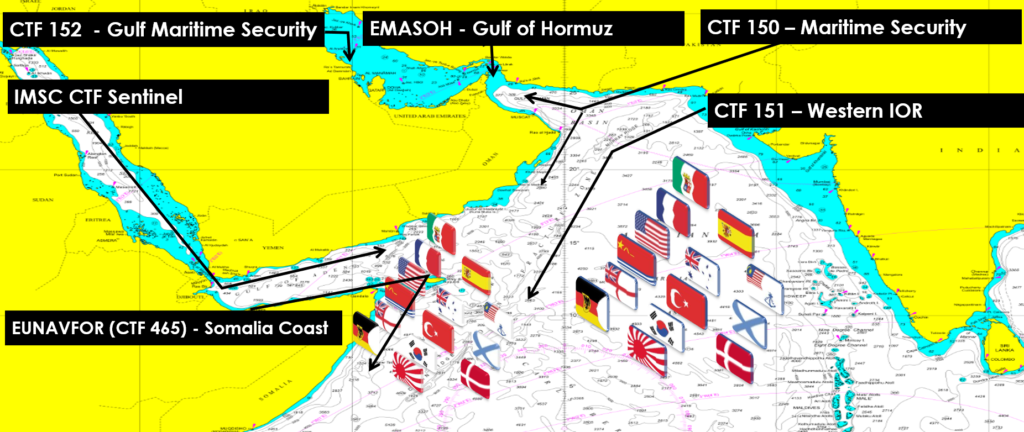
Between 2008 and 2009, the entire region east of the Arabian Sea was declared a High Risk Area (HRA) by the International Maritime Organisation (IMO). Due to efforts led by the Indian Navy, the EU Naval Force, the CTF-151, the US Navy and other naval forces, the area shrank considerably by 2015, 2019 and four years later, the HRA was removed until the Red Sea crisis.
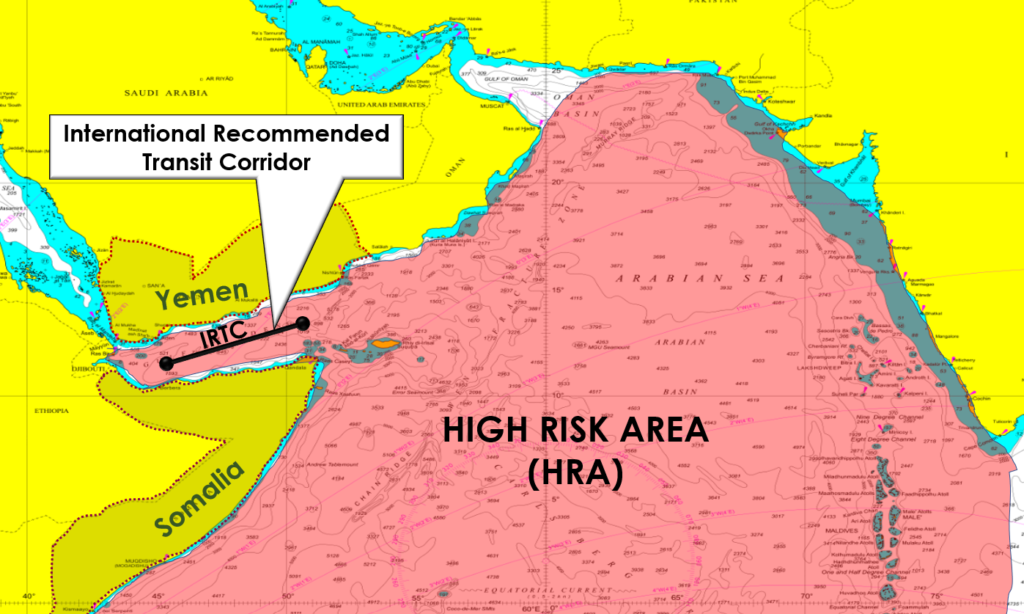
Figure 2: HRA 2008-09
The Red Sea corridor lies at the centre of the trade from Europe to South Asia through the Mediterranean Sea, the Suez Canal, and the Gulf of Aden. Global shipping is reeling through a crisis, and any disruption in the Red Sea can further choke the trade routes, forcing vessels to take the longer route via the Cape of Good Hope to continue trade, increasing insurance premiums, fuel costs, and more time to reach the desired location. Travel time for commercial vessels varies significantly depending on the route chosen. According to data from sources in the Indian Navy, a journey from the Netherlands to China takes approximately 30 days when navigating through the Red Sea, but extends to 38 days via the Cape of Good Hope, assuming a ship speed of 15 knots. This difference is also apparent in shorter routes: transporting wheat from Ukraine’s Odesa to Djibouti requires at least eight days via the Red Sea/Suez Canal, compared to 38 days when rounding the Cape of Good Hope.
One of the possible reasons behind the limited incidents is the relative absence of Houthis during the Gulf crisis. When Iran blocked the Strait of Hormuz, the navies and shipping vessels were preparing for a possible disruption, similar to the 2023 crisis, by Houthis who would attack vessels with drones and cruise missiles. However, the Houthis attacked the Israeli military, avoiding merchant ships. In this context, the Somali pirates could not operate under Houthi cover.
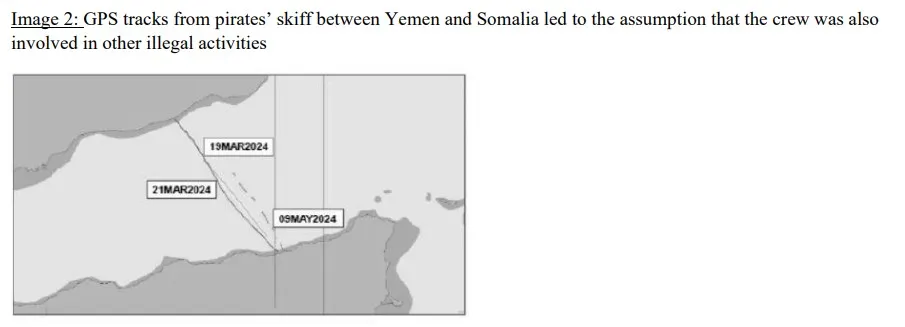
Somali pirates operate under the influence of al-Shabaab, which has links with Houthis. A 2025 UN report states that al-Shabaab and Houthis are in talks mainly on opportunistic grounds and not ideological. The report indicates that Houthis may have sought to benefit from maritime insecurity, including piracy-generated revenue. The US Treasury sanctioned a weapons trafficking network in East Africa in 2022. The US claims arms smugglers in Yemen, even in non-Houthi-controlled areas, are shipping weapons to Somalia for al-Shabaab and Islamic State, using pirates and other smugglers. In 2024, during the attempted hijacking of Chrystal Arctic by armed groups, the GPS tracks from pirates’ skiff showed movements between Yemen and Somalia between March and May 2024, suggesting that they were involved in other activities too.
Conclusion
The return of Somali piracy is not yet a crisis on the scale of 2023, but it is a warning. The current spike has so far been contained by the steady presence of international navies and the absence of Houthi cover at sea. Yet the conditions that bred piracy in the first place, al-Shabaab’s grip on the coast, weak governance in Puntland, and the lucrative arms-and-ransom economy linking Yemen to Somalia, remain firmly in place. As long as those persist, every regional crisis will offer pirates a fresh window of opportunity. Vigilance at sea must therefore be matched by sustained pressure on land.