The Trap of Deterrence
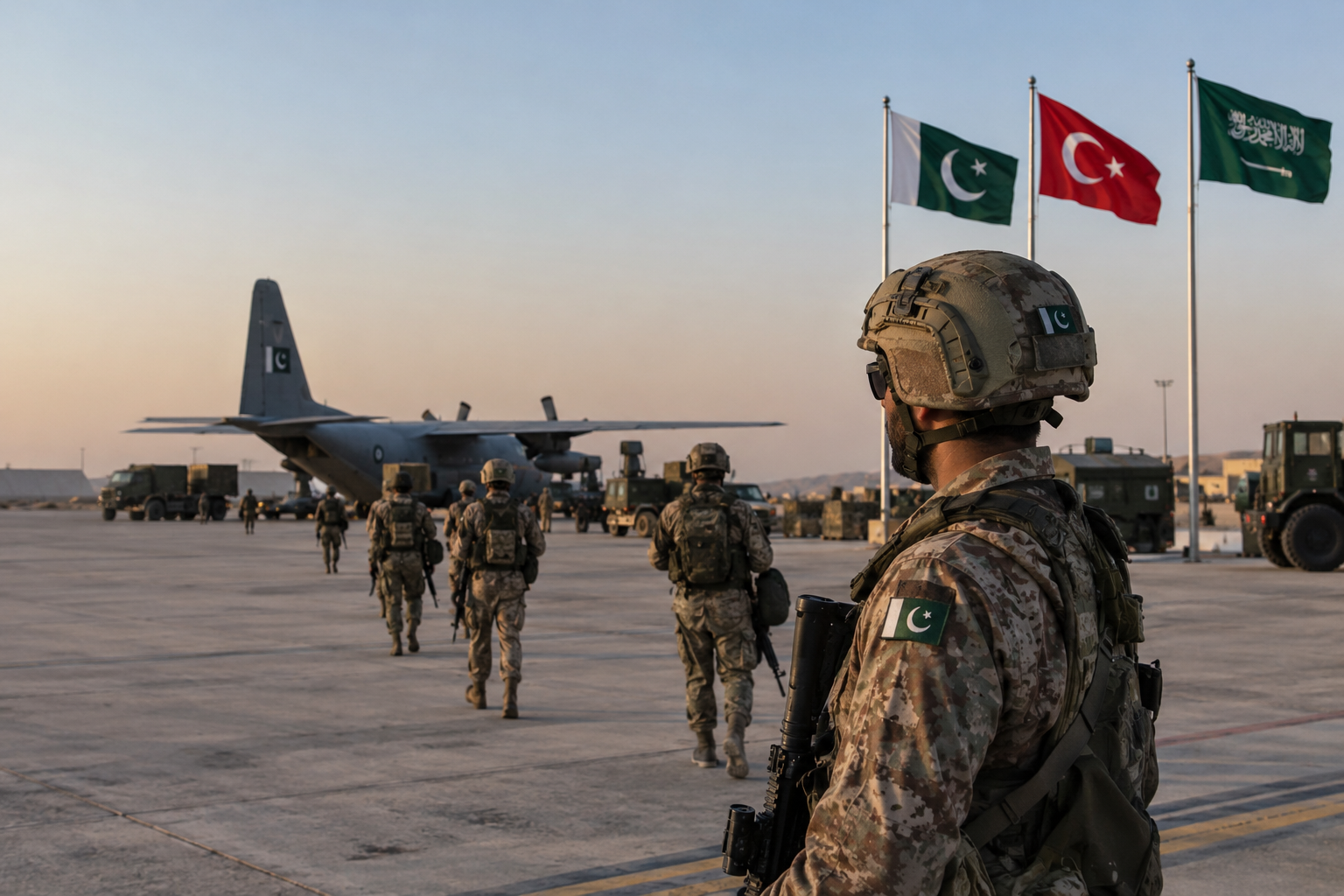
On August 7 2026, Saudi Arabia, Turkey and Pakistan signed the Mecca Joint Defence Agreement and called it a shield. Less than two months later, on October 5, they invoked it for the first time. The reason was not a gap in Saudi defences but a war Riyadh is actively fighting, as Saudi backed forces push to retake Yemen’s Red Sea coast from the Houthis. Islamabad insists the pact has no offensive agenda. That claim is about to be tested. A pact built to deter is now being asked to fight, and Pakistan, the member with the most to lose, is already inside the line of fire, because Pakistan has stationed a substantial number of troops and military resources inside Saudi Arabia.
Every alliance carries a quiet fear on both sides. Saudi Arabia fears being left alone. Its airports, its oil facilities, and even the skies near Mecca have been hit, and it wants to know who will actually show up. Pakistan and Turkey fear the opposite. They worry about being dragged into a war they never chose. The scholar Glenn Snyder called this the alliance security dilemma, the fear of abandonment set against the fear of entrapment. The Houthi war has put both on the table at once.
The trouble is that one promise cannot calm both fears. The more Pakistan reassures Riyadh, the closer it moves to the fighting. The more it hedges, the emptier the pact looks. The Houthis know this. They called the agreement cosmetic when it was signed, and they have since bet that Islamabad and Ankara will stay out. Every missile fired at Saudi Arabia is really a question. Is this pact real?
The Borderlines of Caution
Pakistan has been here before. In 2015, when Riyadh asked for jets and troops against the Houthis, Pakistan’s parliament voted to stay neutral. That memory has not faded, and it shapes how Islamabad thinks about Yemen today. The reasons for caution are still there, and some are stronger now.
Start with Iran. It shares a long and fragile border with Pakistan, and both sides already deal with Baloch militants moving across it. Tehran has made a clear distinction. Defending Saudi territory is one thing, but attacking the Houthis in Yemen is a red line. Pakistan also has a large Shia population, and a war that looks like Sunni states against Iran’s allies can stir sectarian tension at home. Add India on the eastern border and the Taliban and TTP problem on the western one, and Pakistan simply has no spare army for a third front.
But Pakistan cannot walk away either. Saudi Arabia is a banker, an employer of millions of Pakistanis and a protector of the holy sites. Saying no loudly is expensive. So Pakistan will look for a middle path. It will send air defence, protect bases and speak the language of solidarity, while keeping its jets out of Yemen. That is not a loophole in the pact. It is the only side of the pact Pakistan can afford.
The real danger is not a big decision. It is a slow drift. Nobody in Islamabad will say Pakistan is going to war in Yemen. Instead, small steps will happen. Air defence units go to Saudi Arabia. Jets help guard the skies. Soldiers protect bases. All of it sounds defensive.
But a soldier on foreign land is also a target. The Houthis have already hit Saudi airports and an Aramco facility. If one missile lands near Pakistani troops, everything changes. Then perhaps, a defensive job suddenly needs a response.
Social media makes the whole situation more dangerous. Recently, a false claim spread online saying Houthi missiles had hit a Saudi air base and damaged Pakistani JF-17 jets. Islamabad quickly called it fake. The story was untrue, but it still travelled fast, and many people believed it before the correction came. Now imagine the same rumour with a real casualty behind it. Pakistan’s own information ministry has described this sort of material as a deliberate campaign, which means people are already trying to shape how the public feels about this war. In a moment like that, public anger could move the state faster than any careful strategy. Leaders would be forced to respond not to what actually happened, but to what the public believes happened.
The Three Paths Forward
So, where does this trajectory lead? There are three plausible paths.
The first is the most favourable for Pakistan. The pact remains a shield. Pakistani forces defend Saudi territory, the Houthis continue to probe but never break through, and Islamabad never commits a single aircraft to Yemen. The agreement retains its value as a warning, nothing more.
The second is the most perilous. A Houthi strike kills Pakistani personnel, public outrage mounts, and the state comes under pressure to retaliate. Once that happens, Iran’s red line is crossed, and Pakistan finds itself in confrontation with a neighbour that has been watching closely all along.
The third is a quiet withdrawal from the brink. Iran has already proposed a political track with the Houthis, and Pakistan has been conveying that message. If Riyadh accepts, the pact endures, but as a backstop for diplomacy rather than an instrument of war.
Therefore, the pact works only as long as it stays ambiguous. Every side fears what Pakistan might do, so nobody tests it fully. That vagueness has value. It gives Saudi Arabia some comfort, it keeps the Houthis cautious, and it lets Pakistan avoid a commitment it cannot afford. But it also has limits. The first Pakistani loss in this conflict would force Islamabad to show what the promise really means.
Still, the outcome is not fixed. Pakistan has room to manage the risk. It can keep its role defensive, keep talking to Iran, and back a political track with the Houthis. The pact is neither a trap nor a guarantee. It is a test, and the result depends on how carefully Islamabad plays it.